
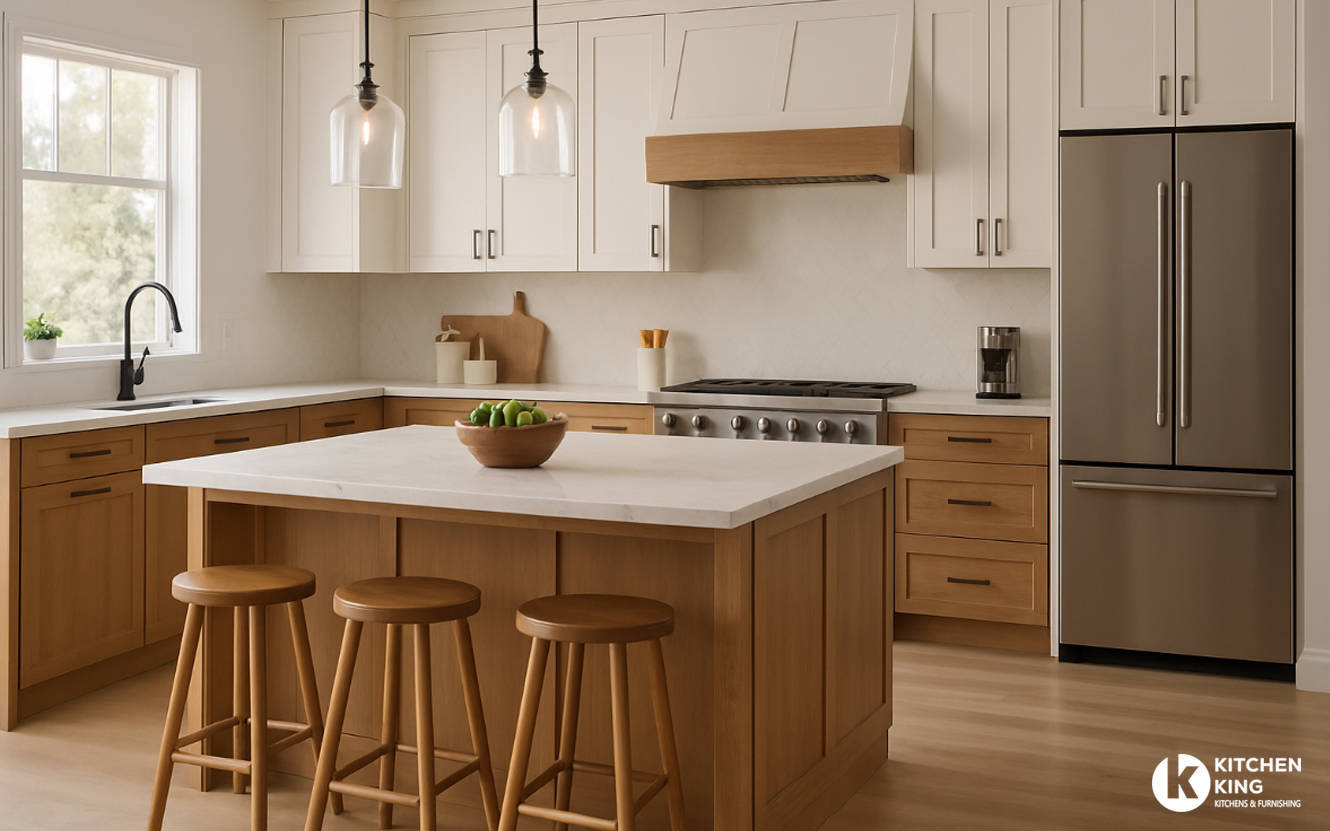
Walk into enough luxury homes across Dubai, and a pattern begins to emerge.
Some kitchens impress you the moment you step inside. Others simply feel expensive. At first glance, the difference is difficult to explain. Both may feature premium appliances, elegant stone worktops, custom cabinetry, and beautifully designed lighting. Yet one feels calm, balanced, and effortless, while the other seems like a collection of expensive products placed in the same room.
That difference has very little to do with budget.
It has everything to do with design.
After working on luxury residential projects for years, experienced kitchen designers learn that homeowners rarely regret choosing better craftsmanship or investing in thoughtful planning. Instead, they regret the decisions that were made too quickly—choosing finishes before defining the layout, selecting appliances before understanding how the space would function, or copying a beautiful kitchen from social media without considering whether it actually suited their own home.
Luxury is not created during installation.
It is created long before manufacturing begins.
Every successful kitchen starts with hundreds of small decisions that work together so naturally that most people never notice them. The cabinet proportions feel right. The island sits exactly where it should. Storage appears almost invisible. Lighting changes throughout the day without drawing attention to itself. Doors align perfectly. Appliances disappear into the design rather than competing with it.
When all these decisions are made well, the kitchen simply feels right.
That feeling is what people often describe as luxury.
Dubai's residential architecture has evolved dramatically over the past decade.
Open-plan villas, contemporary townhouses, penthouses overlooking the skyline, and waterfront homes have transformed the role of the kitchen. It is no longer a room hidden behind a doorway where meals are prepared out of sight.
Today, the kitchen is often the architectural centre of the home.
From the living room, your eyes naturally move toward the island.
From the dining area, cabinetry becomes part of the interior architecture.
Guests gather around the kitchen long before dinner is served.
Children finish homework on the island while parents prepare meals.
Morning coffee, family conversations, celebrations, and everyday routines all happen in the same space.
For designers, this changes everything.
The kitchen is no longer designed as furniture.
It is designed as architecture.
One of the biggest surprises for many homeowners is that professional kitchen designers spend surprisingly little time discussing colours during the early stages of a project.
Instead, they ask questions.
How many people cook every day?
Who usually prepares meals?
Do you entertain guests often?
Is the kitchen used mainly for family life, or is it also a social space?
Do you enjoy cooking from scratch, or is convenience more important?
Do children regularly use the kitchen?
How much grocery storage do you actually need?
The answers shape every design decision that follows.
A retired couple living in a waterfront apartment has completely different requirements from a family of six living in a villa.
Someone who cooks elaborate meals every evening needs different work zones from someone who mainly prepares breakfast and occasional dinners.
Good design begins by understanding people—not products.
Many homeowners judge a kitchen by how it looks.
Designers judge it by how it works.
Imagine arriving home with shopping bags.
Where do you naturally place them?
How far is the refrigerator?
Can dry groceries be stored without crossing the entire kitchen?
What happens when two people cook together?
Can someone unload the dishwasher while another prepares food?
Can children reach everyday items without interfering with cooking?
These questions describe something designers constantly think about:
Movement.
A kitchen should reduce unnecessary movement rather than create it.
The shortest distance is not always the best solution.
Neither is the largest island.
Instead, every movement should feel natural.
You should never have to think about where to go next.
Perhaps no feature has become more closely associated with luxury kitchens than the island.
Yet many oversized islands exist for one reason only:
They look impressive in photographs.
Ironically, the most successful islands rarely draw attention to themselves.
Instead, they quietly become the centre of daily life.
Breakfast begins there.
Children complete school projects there.
Friends gather around it without invitation.
Shopping bags land there after every supermarket visit.
Coffee is shared there on weekend mornings.
Late-night conversations continue there long after dinner has finished.
When designers plan an island, they are not simply adding another cabinet.
They are creating the place where life naturally happens.
Its dimensions depend on circulation.
Its height depends on how it will be used.
Its storage depends on household routines.
Its position depends on everything around it.
A well-designed island feels inevitable—as though it could never have been placed anywhere else.
Pinterest has become one of the most popular sources of kitchen inspiration.
It has also become one of the biggest reasons projects go wrong.
A beautiful photograph captures one perfect moment.
It does not reveal how the kitchen functions.
It does not show where groceries are stored.
It does not explain whether sunlight causes reflections throughout the afternoon.
It does not reveal whether cabinet doors collide with each other.
It does not tell you how fingerprints appear after a busy weekend.
Nor does it explain whether the layout works for a family of five.
Designers often receive dozens of inspiration images from homeowners.
These images are valuable—but only as a starting point.
The goal is never to recreate someone else's kitchen.
The goal is to understand what attracts you to those spaces and reinterpret those ideas for your own home, architecture, lifestyle, and daily routines.
Showrooms encourage emotional decisions.
A polished stone catches the light beautifully.
A textured cabinet door feels luxurious.
A new finish appears unique.
These first impressions matter—but they should never be the only factor.
Experienced designers think differently.
They imagine the material years later.
After thousands of meals.
After children have leaned against the island every afternoon.
After countless coffee cups have been placed on the worktop.
After sunlight has entered the room every morning for an entire decade.
The real question is not:
"Does this material look beautiful today?"
The better question is:
"Will it still feel beautiful after years of everyday life?"
Quartz remains popular because it combines elegance with durability.
Porcelain continues to gain popularity because of its exceptional resistance to heat, scratches, and staining.
Natural stone offers individuality that manufactured surfaces cannot replicate.
Wood introduces warmth that no artificial material fully replaces.
There is no universally perfect material.
There is only the material that best matches the way a particular family lives.
Luxury storage is rarely noticed by visitors.
Homeowners notice it every single day.
One of the most common mistakes during kitchen planning is assuming storage simply means adding more cabinets.
Professional designers think differently.
Storage begins by understanding what needs to be stored.
Large serving dishes.
Coffee machines.
Air fryers.
Stand mixers.
Water bottles.
Lunch boxes.
Cleaning supplies.
Recycling bins.
Pet food.
Bulk groceries.
Every household develops its own rhythm over time.
The kitchen should support that rhythm rather than forcing people to adapt to the furniture.
Modern storage systems have evolved far beyond fixed shelves.
Deep drawers make heavy cookware easier to access.
Pull-out pantry systems eliminate wasted space.
Corner mechanisms transform awkward cabinets into practical storage.
Internal organisers keep everyday utensils where they belong.
Hidden appliance garages reduce visual clutter without sacrificing convenience.
The goal is not simply to maximise storage.
It is to reduce friction in everyday life.
When storage has been designed well, most homeowners stop thinking about it completely.
That is usually the greatest compliment a designer can receive.
Lighting should never be treated as decoration added after the kitchen has been designed.
It shapes how every material is experienced.
Morning sunlight reveals textures differently from afternoon light.
Evening illumination changes colours completely.
Natural oak appears warmer.
Dark cabinetry gains depth.
Stone surfaces reveal movement that remained invisible during the day.
Professional kitchen lighting combines several layers rather than relying on a single ceiling fixture.
Ambient lighting creates overall brightness.
Task lighting improves visibility during food preparation.
Accent lighting highlights architectural features.
Integrated cabinet lighting introduces subtle depth.
The objective is not brightness.
It is comfort.
Some of the most luxurious kitchens never feel brightly lit.
They simply feel beautifully illuminated.
Luxury is not only something you see.
It is something you hear—or rather, something you don't.
Soft-close drawers that never slam.
Cabinet doors that close with gentle precision.
Extractor systems designed to reduce noise without sacrificing performance.
Dishwashers quiet enough to disappear into the background during dinner.
These details rarely appear in showroom brochures, yet they shape the daily experience of living with a kitchen.
The finest kitchens never demand attention.
They simply make everyday routines feel smoother, calmer, and more enjoyable.
Scroll through hundreds of kitchen images online and many appear almost identical.
Beautiful cabinetry.
Premium worktops.
Designer taps.
Integrated appliances.
Yet photographs rarely reveal what truly separates an exceptional kitchen from an average one.
Luxury is often measured in millimetres.
Consistent shadow gaps.
Perfectly aligned cabinet doors.
Drawer fronts that remain level from one end of the room to the other.
Panels that meet seamlessly at corners.
Grain patterns that continue naturally across adjacent doors.
These are details that most homeowners never consciously notice.
They simply sense that the room feels balanced.
True craftsmanship often works quietly.
Its success lies in the fact that nothing distracts the eye.
The day a kitchen is installed is only the beginning of its life.
What matters far more is how it performs years later.
Cabinet construction.
Edge finishing.
Moisture resistance.
Hardware quality.
Internal fittings.
Material stability.
Every one of these factors influences how well the kitchen withstands everyday use.
Two kitchens may appear almost identical when new.
Five years later, the difference becomes obvious.
Doors remain aligned.
Drawers continue to glide effortlessly.
Panels resist movement.
Surfaces maintain their appearance.
Quality reveals itself over time.
That is why experienced designers often encourage homeowners to evaluate kitchens not by how they look on the first day, but by how they are likely to perform after thousands of mornings, family dinners, celebrations, and ordinary routines.
Even the finest cabinetry cannot compensate for poor installation.
No home is perfectly square.
Walls move.
Floors vary.
Ceilings are rarely completely level.
Professional installers spend considerable time making adjustments that homeowners will hopefully never notice.
Panels are carefully scribed against uneven walls.
Doors are adjusted repeatedly until every reveal appears consistent.
Worktops are levelled with remarkable precision.
Appliances are integrated so naturally that they appear to have always belonged there.
Installation is not simply assembly.
It is the final stage of design.
One of the biggest misconceptions surrounding luxury kitchens is that increasing the budget automatically improves the result.
It doesn't.
Some kitchens include every premium appliance available, imported stone from around the world, and expensive finishes throughout—yet still feel visually overwhelming.
Others use a more restrained palette and a carefully considered layout, creating spaces that feel calm, elegant, and timeless.
Luxury is not created by adding more.
It is achieved by knowing what to leave out.
The most refined kitchens are rarely filled with decorative features competing for attention.
Instead, they rely on proportion, balance, craftsmanship, and thoughtful restraint.
Design maturity often reveals itself through simplicity.
Ask experienced kitchen designers about the mistakes clients mention after moving into a new home, and certain themes appear again and again.
Planning storage based on today's needs rather than tomorrow's.
Choosing trendy finishes that quickly lose their appeal.
Underestimating the importance of lighting.
Designing oversized islands that restrict movement.
Leaving appliance decisions until the final stages.
Prioritising appearance over practicality.
Most of these regrets have very little to do with budget.
They stem from planning.
Good design anticipates future routines rather than simply responding to current preferences.
The best kitchens continue to feel effortless because they were designed around how people actually live—not how they imagine they will.
Every year introduces a new collection of colours, textures, materials, and design movements.
Some become global trends almost overnight.
Many disappear just as quickly.
Timeless kitchens rarely chase fashion.
Instead, they are built upon enduring design principles.
Balanced proportions.
Natural materials.
Thoughtful lighting.
Functional layouts.
Refined detailing.
These characteristics remain relevant because they are rooted in architecture rather than trends.
A kitchen should still feel contemporary ten or fifteen years after installation.
That longevity is often the greatest measure of successful design.
Many homeowners spend weeks comparing cabinet colours.
Far fewer spend the same amount of time evaluating the people responsible for designing the kitchen itself.
Yet the designer influences every decision that follows.
An experienced designer asks questions before suggesting solutions.
They study the home's architecture.
They consider circulation.
They understand manufacturing limitations.
They think about maintenance.
They balance aesthetics with practicality.
Most importantly, they recognise that every family lives differently.
A successful kitchen is never copied from another project.
It is developed specifically for the people who will use it every day.
That is the essence of custom kitchen design.
The finest kitchens are remembered long after visitors have forgotten the colour of the cabinetry or the brand of the appliances.
People remember how the space made them feel.
Comfortable.
Welcoming.
Organised.
Effortless.
Beautiful homes are rarely created through individual products.
They emerge when architecture, craftsmanship, materials, lighting, and thoughtful planning work together as a single idea.
The kitchen becomes more than a functional room.
It becomes the place where mornings begin, conversations unfold, celebrations are shared, and everyday life quietly takes place.
Planning a luxury kitchen in Dubai is about far more than selecting premium materials or following the latest design trends.
It is about creating a space that reflects the way you live today while continuing to support the life you will build in the years ahead.
The most successful projects begin with careful planning, thoughtful design, precision manufacturing, and expert installation working together from the very first decision.
For homeowners seeking a truly bespoke kitchen, collaborating with designers and manufacturers who understand both the creative and technical aspects of the process makes every stage significantly more rewarding.
At KITCHEN KING®, every custom kitchen is approached with that philosophy in mind—combining tailored design, precision craftsmanship, and practical functionality to create spaces that feel as exceptional to live in as they are to look at.
Because the true measure of a luxury kitchen is not the impression it creates on the day it is finished.
It is the satisfaction it continues to deliver every single day thereafter.


